Second Mortgage vs HELOC: Which Should You Choose?
Both second mortgages and HELOCs allow you to access home equity, but their structures are fundamentally different. Understanding how each works, when each is appropriate, and how the current rate environment affects the comparison helps you make the right choice for your specific need.
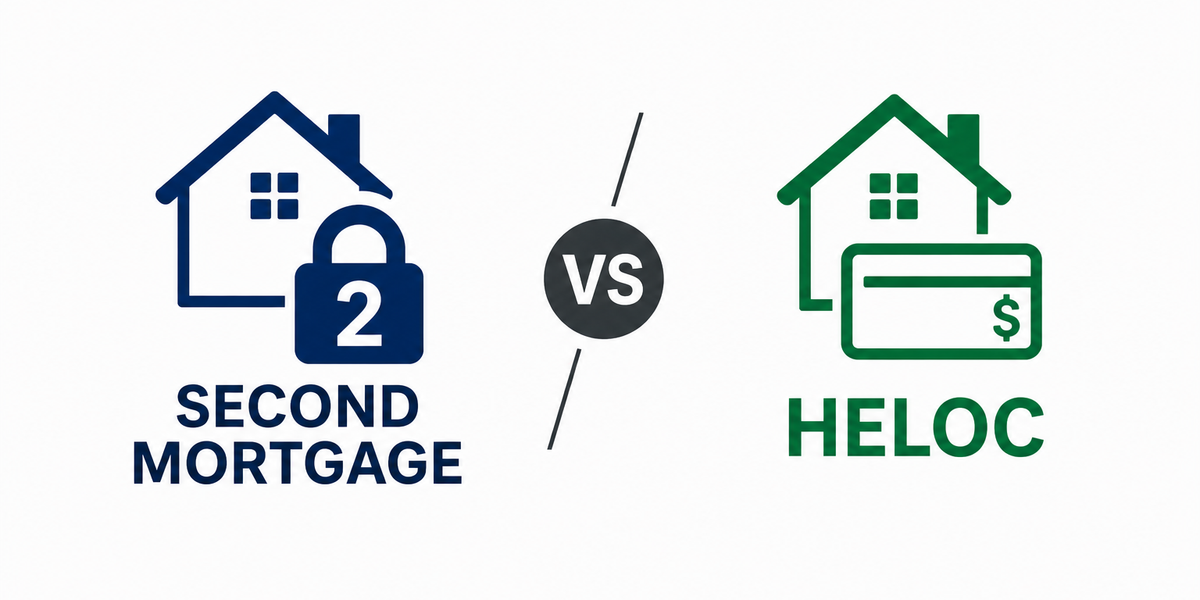
Homeowners who have built equity in their property have two primary options for accessing that equity without selling: a home equity loan (second mortgage) and a home equity line of credit (HELOC). Both use your home as collateral and both allow you to borrow against the equity you have accumulated, but they function very differently and are suited to different purposes.
The choice between a home equity loan and a HELOC is primarily a question of how you need the money. If you need a specific lump sum for a defined purpose, a home equity loan provides a fixed amount at a fixed rate with fixed payments. If you need flexible access to funds over time for variable expenses, a HELOC provides a revolving line of credit that you draw on as needed.
This guide explains how each product works, compares their cost structures, identifies the situations where each is clearly appropriate, and addresses the interest rate environment considerations that affect the comparison between fixed and variable rate products.
How Second Mortgages (Home Equity Loans) Work
A home equity loan, often called a second mortgage, provides a lump sum at a fixed interest rate that is repaid in equal monthly installments over a fixed term, typically five to thirty years. The structure is identical to the original mortgage in its mechanics: you borrow a specific amount, you receive the funds in a single disbursement, and you repay it in fixed installments.
The interest rate on a home equity loan is fixed and typically lower than unsecured personal loans because the loan is secured by your home. Rates are generally 1 to 3 percentage points above current 30-year mortgage rates, though the exact rate depends on creditworthiness, loan-to-value ratio, and the specific lender.
Home equity loans are appropriate for specific, defined expenses where a lump sum is the right funding structure: a complete bathroom renovation with a known total cost, a single large expense like a new roof or HVAC system, or debt consolidation where the total amount is known and fixed.
| Feature | Home Equity Loan (Second Mortgage) | HELOC |
|---|---|---|
| Disbursement | Lump sum at closing | Draw as needed up to limit |
| Interest rate | Fixed for loan term | Variable; tied to prime rate |
| Payment | Fixed monthly payment | Interest-only during draw period; changes after |
| Flexibility | Low; amount fixed at closing | High; draw and repay as needed |
| Best use case | Defined expense with known total | Ongoing or variable expenses |
| Tax deductibility | Interest deductible if used for home improvement | Same; interest deductible if used for home improvement |
| Rate risk | None; rate locked at closing | Rate risk; adjusts with prime rate |
How HELOCs Work
A home equity line of credit functions like a credit card secured by your home: you have a maximum credit limit based on your equity, and you can draw funds up to that limit, repay them, and draw again during the draw period, which typically lasts 10 years. Interest is charged only on the amount actually borrowed, not the full credit limit.
Most HELOCs have a variable interest rate tied to the prime rate, typically prime plus one to three percentage points. As the prime rate changes, the HELOC rate changes, which means monthly interest charges are unpredictable. In a rising rate environment, HELOC costs increase with each rate increase. In a falling rate environment, costs decrease automatically.
After the draw period ends, HELOCs typically enter a repayment period of 10 to 20 years during which draws are no longer allowed and the outstanding balance must be repaid. Some HELOCs require interest-only payments during the draw period and full principal-plus-interest payments during repayment, which can create a significant payment increase.
The Rate Environment and Which Product It Favors
The choice between a fixed-rate home equity loan and a variable-rate HELOC is significantly affected by the interest rate environment. In a low-rate environment, locking in a fixed rate through a home equity loan provides predictability at a competitive cost. In a high-rate environment, a fixed-rate home equity loan locks in an expensive rate forever, while a HELOC benefits if rates fall.
In the current rate environment, the question is whether rates are more likely to fall from current levels over your borrowing period. If the answer is yes, a HELOC's variable rate allows you to benefit from future decreases. If rates may rise further or remain high, the fixed rate of a home equity loan eliminates rate risk.
Some lenders offer fixed-rate HELOCs or allow you to lock a portion of a HELOC balance at a fixed rate while keeping the remainder variable. These hybrid products can provide partial rate protection while retaining the flexibility that makes HELOCs valuable.
Tax Deductibility: An Important Consideration
Interest on both home equity loans and HELOCs is potentially deductible for taxpayers who itemize deductions, but only when the funds are used to buy, build, or substantially improve the home that secures the loan. The Tax Cuts and Jobs Act of 2017 eliminated deductibility for home equity interest used for other purposes, such as debt consolidation or personal expenses.
Using a HELOC or home equity loan to pay for a kitchen renovation or addition preserves the tax deductibility of the interest. Using the same loan to consolidate credit card debt or fund a vacation eliminates the deductibility. For borrowers in high tax brackets who itemize deductions, this distinction can meaningfully affect the after-tax cost of borrowing.
Verify the deductibility of your specific use with a tax advisor, particularly for mixed-use situations where loan proceeds are partially used for home improvement and partially for other purposes.
Final Thoughts
The choice between a home equity loan and a HELOC comes down to the nature of your funding need and your view of the interest rate environment. For defined expenses with known total costs, the home equity loan's fixed rate and fixed payment provide predictability and simplicity. For ongoing or variable expenses where flexibility is valued, the HELOC's revolving structure is more efficient.
Rate environment considerations favor fixed-rate home equity loans when rates are low or expected to rise, and HELOC borrowing when rates are high and expected to fall. The hybrid products that allow rate locks within a HELOC structure offer middle-ground options for borrowers who want flexibility with some rate protection.
Use the right tool for the specific need. Both products are valuable when matched to the appropriate purpose and when the collateral risk of home-secured borrowing is clearly understood.
Frequently Asked Questions
Clarion Editorial Team
Editorial Research Team
Clarion Editorial Team creates plain-English educational content covering legal, insurance and finance topics for US and UK readers.
- Editorial Research
- Consumer Education
- Financial Literacy
Related Guides

ARM vs Fixed-Rate Mortgage: Which Is Right for You?

Closing Costs Explained: What You Will Pay at Settlement

FHA vs Conventional Loan: Which Is Better?
