Best ETFs to Buy for Long-Term Growth
Exchange-traded funds have democratized investing by making it possible to own diversified portfolios at minimal cost. The best ETFs for long-term growth combine broad market exposure, low expense ratios, and the structural simplicity that supports consistent returns over decades.
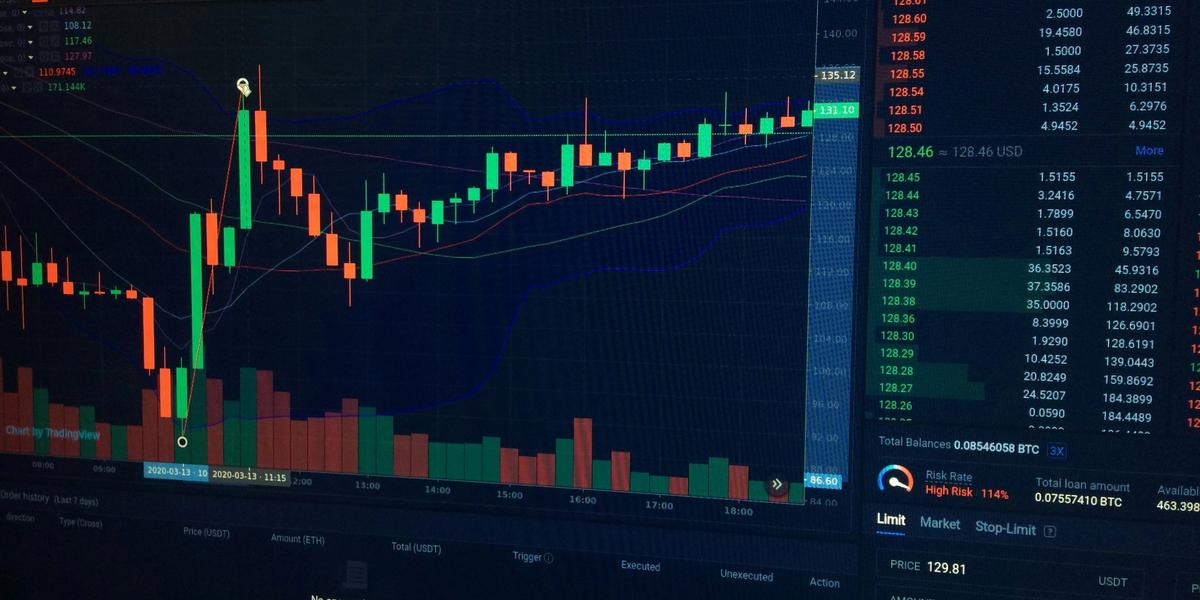
The proliferation of exchange-traded funds over the past two decades has produced one of the genuinely positive developments in personal investing: the ability to own a diversified, professionally structured portfolio for a few basis points per year in expense. What once required active fund management charging one percent or more annually can now be achieved with passive index funds at 0.03 to 0.10 percent per year, a difference that compounds into thousands of dollars of additional returns over a lifetime of investing.
But the abundance of ETF options, now numbering in the thousands, creates its own challenge. Not all ETFs are equally appropriate for long-term growth, and the quality differences between a well-designed broad market index fund and a narrowly focused sector or thematic ETF are significant. The best ETFs for long-term growth are not the most exciting or the most talked about; they are the most reliably effective at their stated purpose.
This guide identifies the most important ETF categories for long-term growth, what to look for in evaluating any ETF, and the specific funds that consistently earn their place in a long-term portfolio.
What Makes an ETF Good for Long-Term Growth
Expense ratio is the most important factor in ETF selection because it is the guaranteed drag on your returns, unlike market performance which is uncertain. An expense ratio of 0.03 percent means you pay $3 per year on a $10,000 investment. An expense ratio of 0.50 percent costs $50 per year on the same investment. That difference compounds dramatically over decades: a $50,000 investment growing at 8 percent annually for 30 years accumulates to $503,000 at 0.03 percent expense and $432,000 at 0.50 percent expense, a $71,000 difference from fees alone.
Breadth of diversification is the second critical factor. An ETF that holds 500 companies is more diversified than one holding 50, and one holding thousands of global companies is more diversified still. Broader diversification reduces the impact of any single company's failure on the overall portfolio and is the mechanism by which index investing captures market returns rather than the returns of a concentrated bet.
Index methodology matters because it determines what the ETF actually owns. Market-capitalization-weighted indexes give more weight to larger companies, which means the largest companies drive a significant portion of returns and risk. Equal-weighted, factor-weighted, and fundamentals-weighted indexes offer different risk and return characteristics. For most long-term investors, broad market-cap-weighted indexes provide the most straightforward and historically competitive option.
| ETF | Expense Ratio | Holdings | What It Provides |
|---|---|---|---|
| VTI (Vanguard Total Stock Market) | 0.03% | ~3,700 US companies | Entire US stock market |
| VOO (Vanguard S&P 500) | 0.03% | 500 largest US companies | US large-cap market |
| VXUS (Vanguard Total International) | 0.07% | ~8,600 companies | All non-US developed and emerging markets |
| BND (Vanguard Total Bond Market) | 0.03% | ~10,000 US bonds | US investment-grade bond market |
| VT (Vanguard Total World) | 0.07% | ~9,000 companies globally | Entire global stock market in one fund |
| AVUV (Avantis US Small Cap Value) | 0.25% | ~740 small cap value companies | Small cap value factor premium |
Core ETFs for the Foundation of a Long-Term Portfolio
The Vanguard Total Stock Market ETF, ticker VTI, provides exposure to virtually every publicly traded US company from large-cap to small-cap in a single fund at 0.03 percent expense ratio. Owning VTI means owning a proportional share of the entire US economy. When US stocks perform well as an aggregate, VTI performs well. There is no stock selection risk, no manager dependency, and the diversification is as complete as the US market allows.
For international diversification, VXUS or the iShares Core MSCI Total International Stock ETF (IXUS) provide exposure to thousands of companies across developed and emerging markets outside the United States. The combination of VTI and VXUS in roughly a 60/40 or 70/30 ratio approximates the global market portfolio, which holds the theoretical and empirical grounding of modern portfolio theory.
For investors who want the simplicity of a single fund that covers the entire global stock market, VT (Vanguard Total World Stock ETF) combines US and international stocks in one product at 0.07 percent expense. The simplicity is its primary advantage; the slight limitation is that you cannot independently adjust the US-to-international ratio.
Factor ETFs and Tilts Worth Considering
Factor investing recognizes that certain characteristics, called factors, have historically been associated with higher long-term returns than the broad market. The most empirically supported factors are value (stocks with lower valuations relative to fundamentals), size (smaller companies), and profitability (companies with higher earnings quality). Factor ETFs tilt toward these characteristics.
The Avantis US Small Cap Value ETF (AVUV) and Dimensional Fund Advisors ETFs provide factor exposure with more sophisticated implementation than traditional factor indexes. These funds have higher expense ratios than pure market-cap index funds but offer potential return enhancement that the academic literature suggests may persist over long periods.
Whether to include factor ETFs depends on the investor's conviction in factor premiums and tolerance for periods when factors underperform the broad market, which can last years. For most investors, a core of broad market index funds is the appropriate foundation, with factor tilts as an optional enhancement for those who understand what they are buying.
What to Avoid in ETF Selection
Thematic ETFs focused on trendy investment themes, including cannabis, artificial intelligence, clean energy, and similar categories, consistently underperform broad market indexes over meaningful time periods. They attract investor money after the theme has already been priced into valuations, have high expense ratios, and concentrate risk in a narrow slice of the market that may not perform as expected.
Leveraged and inverse ETFs are not appropriate for long-term investing under any circumstances. These products are designed for short-term trading and reset daily in ways that cause them to decay in value over time even when the underlying market moves in the expected direction. They are complex, expensive, and inappropriate for the goals of a long-term investor.
High-expense ETFs in any category are worth avoiding when lower-cost alternatives exist. Many target-date funds, actively managed ETFs, and specialty ETFs charge 0.50 percent to 1.0 percent or more when comparable exposure is available at 0.03 to 0.10 percent. The difference in cost is the guaranteed return advantage of the lower-cost alternative, compounded over decades.
Final Thoughts
The best ETFs for long-term growth are not the most complex, the most marketed, or the most discussed on financial media. They are the broad, cheap, simple index funds that capture the market's aggregate return with minimal friction. VTI, VXUS, and BND, or their equivalents at other low-cost providers, form the backbone of most excellent long-term investment portfolios.
The investment decision that matters most is not which ETF to buy but committing to regular contributions, maintaining your allocation through market cycles, and minimizing the costs and taxes that erode returns over time. A simple portfolio of three index ETFs consistently maintained outperforms the vast majority of more complex strategies.
Simple. Cheap. Diversified. Consistent. These are the properties of the best ETFs for long-term growth, and they are available to every investor today.
Frequently Asked Questions
Clarion Editorial Team
Editorial Research Team
Clarion Editorial Team creates plain-English educational content covering legal, insurance and finance topics for US and UK readers.
- Editorial Research
- Consumer Education
- Financial Literacy
Related Guides

Asset Allocation: How to Diversify Your Portfolio

Bond Investing: What Bonds Are and How to Use Them

Compound Interest: The Most Powerful Force in Investing
