Bond Investing: What Bonds Are and How to Use Them
Bonds are the portfolio's stabilizer, the ballast that moderates volatility and provides income when stocks are declining. Understanding how bonds work, what drives their returns, and how to use them effectively is essential knowledge for any investor building a complete portfolio.
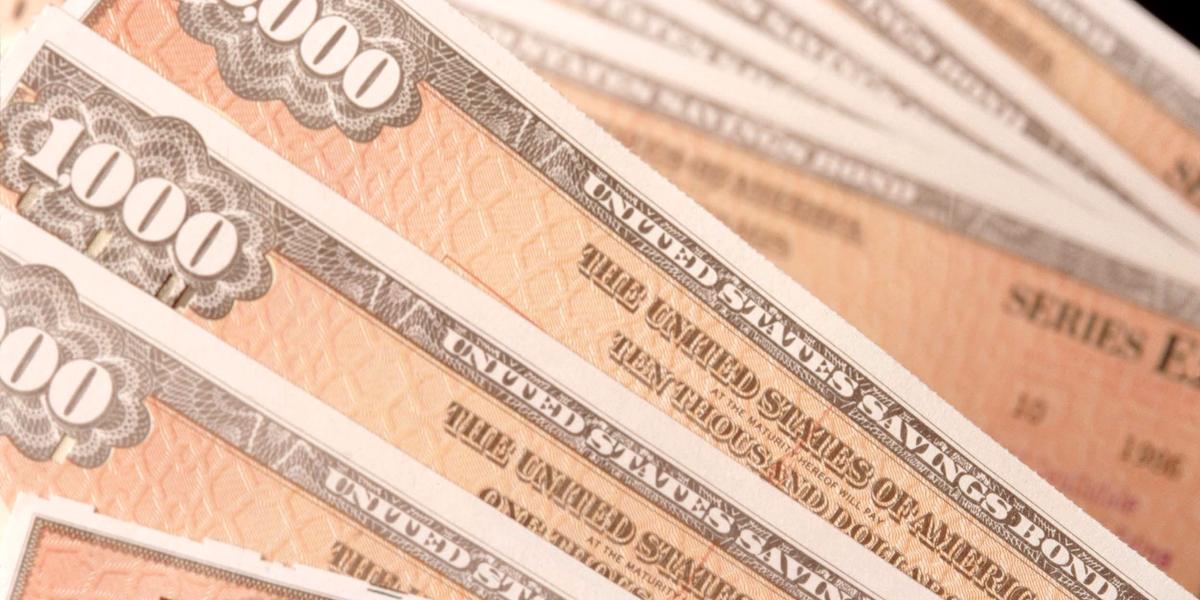
Bonds are the part of the investment portfolio that most people understand least and think about least, which is ironic given that they play one of the most important roles in managing portfolio risk. For investors who have ever watched their stock portfolio decline 30 or 40 percent in a market downturn and wished they had something in their portfolio that was not falling, bonds are the answer they were looking for.
A bond is a loan. When you buy a bond, you are lending money to a government, municipality, or corporation for a specified period at a specified interest rate. The borrower promises to pay interest periodically and to return the principal when the bond matures. This simple structure creates predictable cash flows and less volatility than stocks, which is what makes bonds valuable in a diversified portfolio.
This guide explains how bonds work, the different types of bonds and their risk profiles, what drives bond prices and yields, and how to use bonds effectively in a long-term investment portfolio.
How Bonds Work: The Basics
A bond is characterized by its face value (the principal amount borrowed), its coupon rate (the annual interest rate paid as a percentage of face value), and its maturity date (when the principal is returned). A $1,000 bond with a 4 percent coupon pays $40 per year in interest, typically in two $20 semi-annual payments, until the bond matures and the $1,000 principal is returned.
Bond prices and yields move inversely. When interest rates rise, existing bonds with lower coupon rates become less attractive relative to newly issued bonds, so their prices fall to compensate. When interest rates fall, existing bonds become more attractive and their prices rise. This inverse relationship is the primary source of bond price volatility and is why bond prices can decline in rising interest rate environments.
Duration measures a bond's sensitivity to interest rate changes. A bond with a duration of five years will decline approximately 5 percent in price for every 1 percent increase in interest rates. Longer-duration bonds are more sensitive to interest rates than shorter-duration bonds, which is why long-term Treasury bonds can be quite volatile even though they are considered default-free.
| Bond Type | Issuer | Risk Level | Yield (typical) | Role in Portfolio |
|---|---|---|---|---|
| US Treasury | Federal government | Virtually none | Low to moderate | Safety; liquidity; deflation hedge |
| Investment Grade Corporate | Large corporations | Low to moderate | Moderate | Income; modest return over Treasuries |
| Municipal | State/local governments | Low to moderate | Low (but tax-exempt) | Tax-advantaged income for high earners |
| High Yield / Junk | Lower-rated corporations | Moderate to high | Higher | Income; partial equity correlation |
| Emerging Market | Foreign governments/corps | Moderate to high | Higher | Diversification; higher potential return |
| TIPS | US government (inflation-linked) | Very low | Real return + inflation | Inflation protection |
What Drives Bond Returns
Bond returns come from three sources: coupon income from interest payments, price appreciation or depreciation as interest rates change, and reinvestment of coupons at prevailing rates. Over long holding periods, the coupon income is the dominant driver of total return for investment-grade bonds. Price changes matter more over shorter holding periods.
The yield to maturity is the most useful single measure of a bond's expected return if held to maturity. It incorporates the current price, the remaining coupon payments, and the return of principal at maturity into a single annualized return figure. When comparing bonds, the yield to maturity provides a standardized basis for comparison that accounts for differences in price, coupon, and maturity.
Credit risk, the risk that the issuer defaults and fails to pay interest or principal, is the other key factor in bond returns. Higher-quality bonds, meaning US Treasuries and investment-grade corporate bonds, offer lower yields because the probability of default is low. High-yield bonds compensate investors for higher default risk with higher yields. The credit spread, the additional yield over Treasuries, reflects the market's assessment of default risk.
How to Use Bonds in a Portfolio
The primary role of bonds in a diversified portfolio is risk reduction and stability. Bonds generally decline less than stocks in market downturns and sometimes appreciate when stocks are falling, as investors move to safe haven assets. This diversification benefit reduces portfolio volatility and can provide the psychological comfort that prevents investors from panic-selling during market corrections.
Rebalancing between stocks and bonds enforces a systematic buy-low-sell-high discipline. When stocks fall significantly and bonds hold their value, rebalancing means selling some bonds and buying stocks at lower prices. This mechanical process captures value from volatility over time.
The appropriate bond allocation depends on your time horizon and risk tolerance. Younger investors with decades before retirement may hold only 10 to 20 percent bonds or none at all. Investors approaching retirement typically hold 30 to 40 percent or more. In retirement, the allocation often shifts toward bonds and other stable assets to support reliable income and limit sequence-of-returns risk.
Practical Bond Investing: Individual Bonds vs Bond Funds
Individual bonds offer the certainty of knowing exactly when you will receive your principal back and at what interest rate you will be paid in the interim. The limitation is that meaningful diversification across issuers requires purchasing many bonds, and transaction costs for individual bond purchases can be significant for retail investors.
Bond funds and ETFs provide instant diversification across hundreds or thousands of bonds at low cost. The trade-off is that bond funds do not have a maturity date; the fund continuously rolls maturing bonds into new ones, maintaining a target duration. This means bond fund investors face ongoing price volatility from interest rate changes without the certainty of a specific maturity date.
For most individual investors, bond index funds like BND (Vanguard Total Bond Market ETF) or AGG (iShares Core US Aggregate Bond ETF) provide the most cost-effective and diversified bond exposure available. These funds offer investment-grade US bond market exposure at expense ratios of 0.03 to 0.06 percent.
Final Thoughts
Bonds are not glamorous investments, and in bull markets for stocks they are easy to dismiss. Their value becomes most apparent when stock markets decline sharply and the bond allocation provides stability, income, and funds to rebalance into cheaper stocks. That is exactly when bonds earn their place in a diversified portfolio.
For most long-term investors, a simple total bond market index fund held in a tax-advantaged account alongside a stock index fund provides the diversification, income, and risk reduction that the bond allocation is supposed to deliver at minimal cost.
The boring portfolio components are often the most important ones. Bonds are the investment equivalent of insurance: you may wish you did not need them right up until the moment you are grateful you have them.
Frequently Asked Questions
Clarion Editorial Team
Editorial Research Team
Clarion Editorial Team creates plain-English educational content covering legal, insurance and finance topics for US and UK readers.
- Editorial Research
- Consumer Education
- Financial Literacy
Related Guides

Asset Allocation: How to Diversify Your Portfolio

Best ETFs to Buy for Long-Term Growth

Compound Interest: The Most Powerful Force in Investing
